

97% Recommends: 10 Books on Creative Thinking

About: Recommends Duration: 9 minutes Books: 10 Result: Thinking
The books that will rewire how you see problems, connect ideas, and think beyond the obvious.
Everyone talks about thinking outside the box. Almost nobody explains what the box actually is.
The box is pattern recognition. The mental shortcuts your brain builds over years of education, experience, and cultural conditioning. These shortcuts are useful. They help you navigate the world efficiently. But they're also the reason most people, when faced with a problem, reach for the same solutions everyone else reaches for. The box isn't a lack of intelligence. It's an excess of familiarity.
Creative thinking is the deliberate practice of breaking those patterns. Learning to see connections where others see separation, to reframe questions before rushing to answers, and to hold multiple contradictory ideas in your head long enough for something new to emerge. It's a skill. And like any skill, it can be developed, sharpened, and taught.
These ten books won't give you a formula for having better ideas. They'll change the way you think about thinking itself. That's where the real leverage is.
Ben Rennie
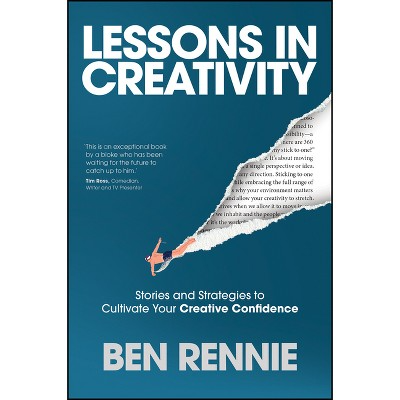
The book that started this platform. Rennie draws on decades of working with brands like Nike, Patagonia, and Chanel alongside his experience as a designer and B Corp founder to build a practical framework for creative thinking that goes beyond brainstorming techniques. The Orbital Design methodology sits at the heart of it: creativity as a system of interconnected forces rather than a linear process. Grounded in real projects, honest about failure, and refreshingly free of the "just be more creative" platitudes that fill most books in this space.
Take from it: Creativity isn't a moment of inspiration. It's a way of seeing that can be designed, practised, and scaled.
James Webb Young
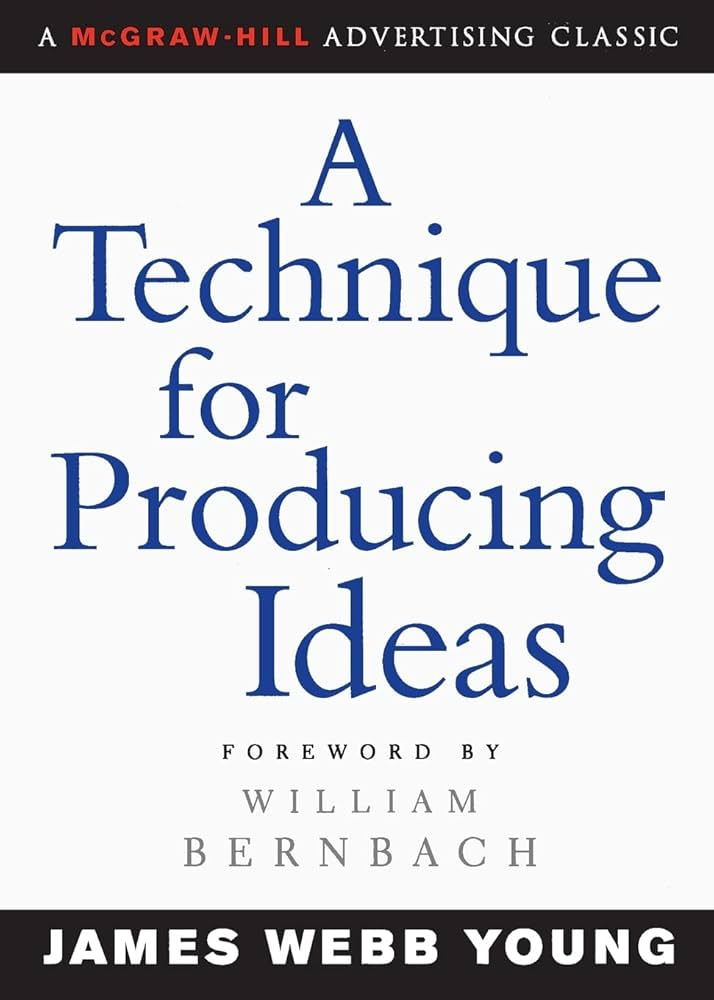
Written in 1939 and still the most concise book on creative thinking ever published. Young, a legendary advertising executive, lays out a five-step process for generating ideas that takes forty minutes to read and a lifetime to master. The core insight is deceptively simple: an idea is nothing more than a new combination of old elements, and the ability to make those combinations depends on your ability to see relationships. That's the whole method. And it works.
Take from it: The capacity to bring old elements into new combinations depends entirely on your ability to see relationships others have missed.
Edward de Bono
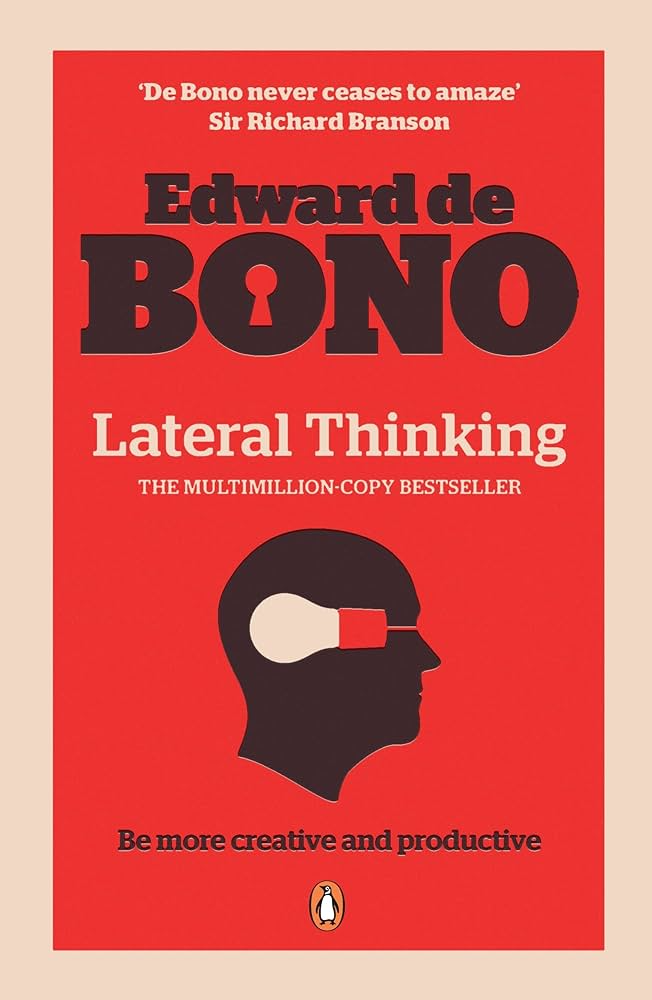
De Bono coined the term in 1967 and this book remains the definitive guide to what it means. Where vertical thinking digs deeper into the same hole, lateral thinking digs a new hole entirely. He provides structured techniques — random entry, provocation, reversal — for deliberately disrupting established thought patterns. More textbook than page-turner, but the tools are genuinely useful for anyone who needs to think differently on demand, not just when inspiration strikes.
Take from it: You cannot dig a hole in a different place by digging the same hole deeper. Creative thinking requires changing direction, not increasing effort.
Tina Seelig

Seelig has spent years teaching creativity at Stanford and this book is the distillation of that work. Where most creativity books focus on the individual, Seelig zooms out to the ecosystem: knowledge, imagination, attitude, resources, environment, culture. She maps how these six elements interact to either ignite or suppress creative thinking, and gives practical tools for shifting each one. It's one of the most structured books on this list and one of the most immediately applicable. The chapter on reframing questions alone is worth the read.
Take from it: Creativity isn't just about individual talent. It's about the ecosystem you build around your thinking.
Anthony Brandt & David Eagleman
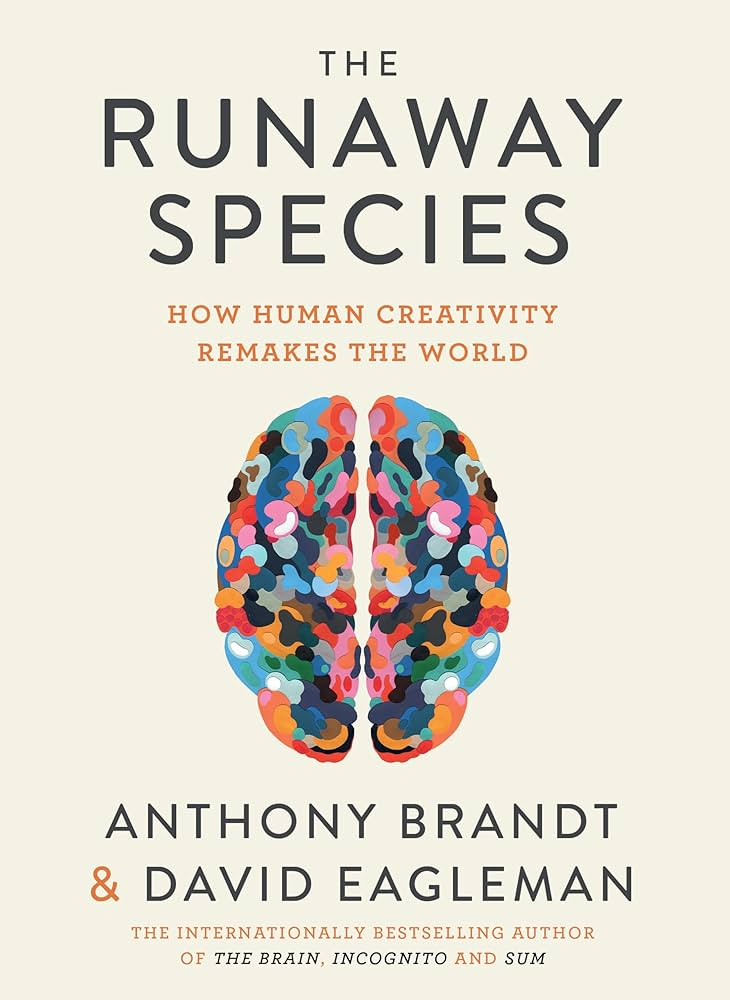
A neuroscientist and a composer team up to explain how the human brain generates new ideas. Their answer: three cognitive strategies, bending, breaking, and blending. We take what exists and warp it, fracture it, or fuse it with something else. Every creative act in human history from Picasso to the iPhone can be traced back to one of these three operations. The most scientifically grounded book on this list, and the one that makes the clearest case that creativity is a fundamental feature of how all brains work, not a special gift reserved for a few.
Take from it: The human brain doesn't create from nothing. It takes what exists and transforms it.
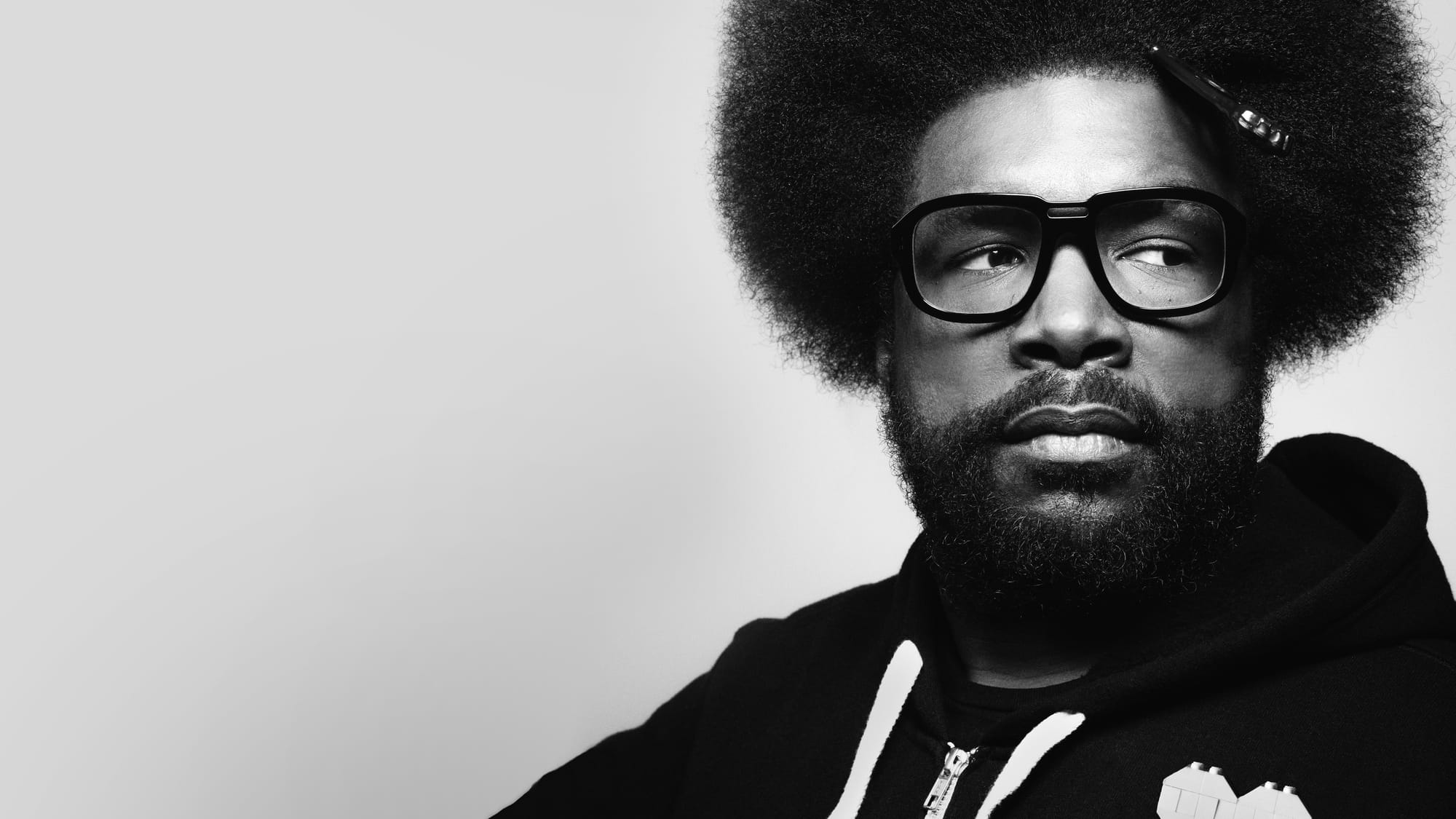
Questlove

Questlove, musician, producer, filmmaker, and one of the most creatively restless minds working today, wrote this as a genuine exploration of how creative thinking actually functions in a life lived making things. It's personal, wide-ranging, and grounded in real experience across music, film, food, and culture. He writes about curation as creativity, about influence and originality, about the tension between paying homage and finding your own voice. For anyone who thinks deeply about where ideas come from and how culture shapes thinking, this one shifts something.
Take from it: Your influences don't limit your originality. They're the raw material it's built from.
adrienne maree brown

The most unusual book on this list and one of the most important. Brown draws on the principles of living systems, how mycelium networks, how flocks of starlings move, how ecosystems adapt and self-organise, to build a framework for creative thinking and social change. The argument is that the most resilient, adaptive, and creative systems in nature share specific patterns: they're decentralised, they respond to feedback, they prioritise relationships over hierarchy. Brown applies these principles directly to how humans think, organise, and make things together. It connects directly to the Orbital Design philosophy that sits at the heart of 97% Creative.
Take from it: Nature has been solving hard problems for 3.8 billion years. Creative thinking gets sharper when you learn to think like a living system.
David Epstein
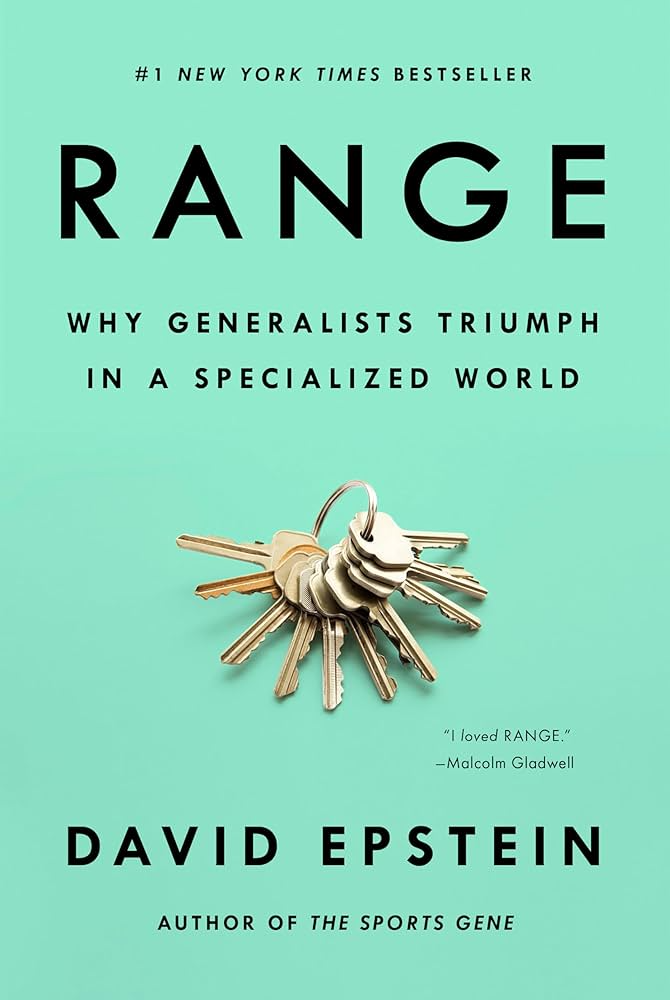
The counterargument to the 10,000-hours myth. Epstein's research shows that in most fields, especially those that are complex and unpredictable, generalists outperform specialists. The people who think most creatively are those with broad experience across multiple domains. Range makes the case for sampling widely, learning slowly, and connecting ideas across disciplines. Essential reading for anyone who's ever felt guilty about having too many interests. Your breadth isn't a distraction from your work. It's the source of it.
Take from it: The most creative thinkers draw connections across domains. Breadth isn't a liability. It's the whole point.
Steven Johnson
Johnson studies the environments that produce innovation, from coral reefs to Renaissance Florence to the modern internet, and identifies seven patterns that recur across all of them. The eureka moment is largely a myth. Most good ideas emerge slowly through what Johnson calls the slow hunch: a half-formed thought that collides with another half-formed thought over time. A compelling argument for creating the conditions where ideas can connect, rather than trying to force breakthroughs on demand.
Take from it: Good ideas don't come from isolation. They come from connection between people, disciplines, and half-formed hunches that finally find their match.
Daniel Kahneman
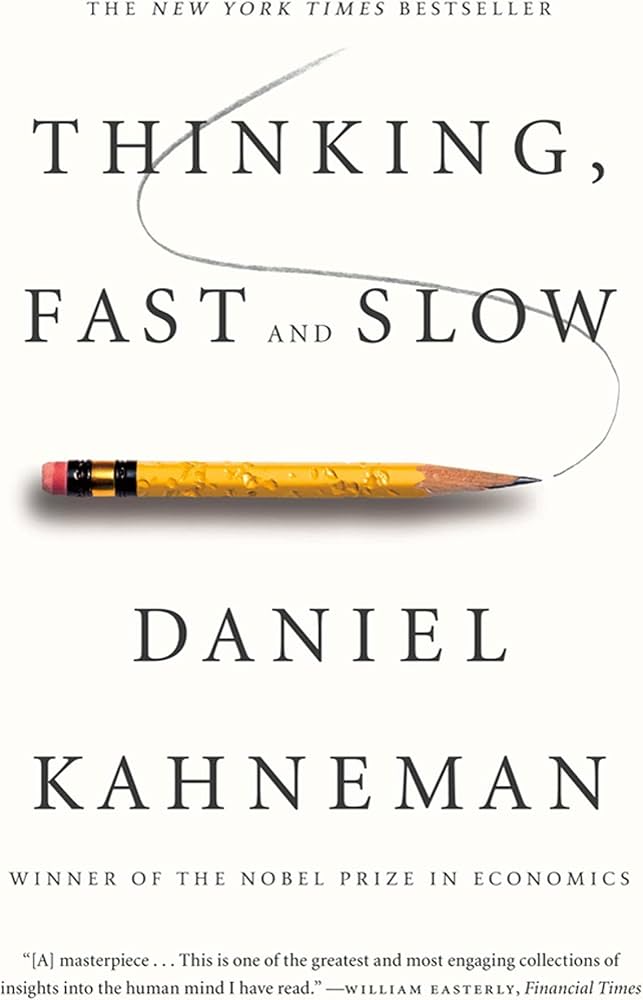
The book that explains why your brain works against you. Nobel laureate Kahneman maps the two systems of thought, System 1 (fast, intuitive, automatic) and System 2 (slow, deliberate, analytical), and shows how cognitive biases distort our judgement in predictable ways. It's not a creativity book in the traditional sense, but understanding how your brain defaults to shortcuts is essential for anyone who wants to think more originally. You can't break patterns you can't see.
Take from it: To think creatively, you first need to understand how your brain thinks automatically, and where those automatic thoughts lead you astray.
Read as a set, these ten books reveal something important: creative thinking isn't about having a "creative brain." It's about understanding how all brains work, the shortcuts, the biases, the pattern-matching, and then deliberately building habits and environments that disrupt those defaults.
Young gives you the method. De Bono gives you the techniques. Brandt and Eagleman give you the neuroscience. Seelig gives you the ecosystem design. Questlove gives you the cultural lens. Brown gives you the living systems framework. Epstein gives you permission to be broad. Johnson gives you the environmental conditions. Kahneman gives you the self-awareness. And Rennie gives you the applied framework: creativity as a designable system, not a mystical gift.
The common thread is that creative thinking is learnable. It starts with how you think about thinking.
97% Creative. Because you already are.
97% Creative. Because you already are.
Your link has expired. Please request a new one.
Your link has expired. Please request a new one.
Your link has expired. Please request a new one.
Great! You've successfully signed up.
Great! You've successfully signed up.
Welcome back! You've successfully signed in.
Success! You now have access to additional content.